Action for Primates



|
Action for Primates |
|
|
The following are news releases for 2026. See elsewhere for news releases from other years.
Index of news releases; select date & title to access:
03 August 2026: Animal protection groups sound alarm over resurgence in exports of long-tailed macaques from Indonesia
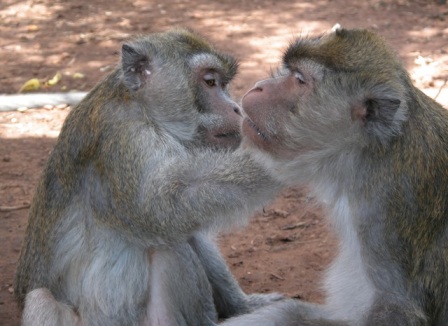
Action for Primates, Jakarta Animal Aid Network (JAAN) and Lady Freethinker have condemned the resurgence in the export of long-tailed macaques (Macaca fascicularis) from Indonesia to be used in laboratories. The CITES (Convention on International Trade in Endangered Species of Wild Fauna and Flora) has recorded a quota for the export of 1,928 monkeys submitted by Indonesia in June 2026 (1). This is the first quota to be submitted since 2022.
Sarah Kite, Co-founder, Action for Primates, stated: The resumption of exporting long-tailed macaques by Indonesia is an alarming development. This latest exploitation and persecution comes at a time when not only is the species globally at risk, but there is a growing political and scientific move towards ending the use of non-human primates in research and toxicity testing. Action by the Indonesian government to provide protection for its long-tailed macaque population is long overdue.
Femke den Haas, Co-founder of Jakarta Animal Aid Network (JAAN), stated: The Indonesian government is taking a major step backwards on primate protection. At a time when the global community is working to strengthen protections for long-tailed macaques, weakening safeguards for one of Indonesia's most exploited native species is a deeply concerning decision that threatens animal welfare, conservation, and the country's international reputation.
According to current news reports, a facility with the capacity to hold 4,000 long-tailed macaques has been built in Mesuji Regency, Lampung. The plan is to breed the animals and then export them overseas for research and toxicity testing. It has also been reported that the company will purchase wild monkeys from the local community for a price of Rp200,000 per animal (2). This raises concerns about the source of breeding animals and the potential laundering of wild-caught individuals into commercial breeding operations.
Long-tailed macaques are indigenous to Indonesia and are part of the rich and diverse ecosystem, contributing to the country's biodiversity. Unfortunately, long-tailed macaques are not protected under Indonesian law despite the species listed under Appendix II on CITES, and its conservation status assessed as Endangered, with a decreasing population trend, by the International Union for Conservation of Nature's Red List (3). The absence of legal protection has facilitated the continued capture of wild macaques for commercial breeding and export, as well as domestic trade for pets, markets, and exploitation for online social media content. Further, given Indonesia's importance as a range state, renewed exports raise concerns for the long-term conservation of the species.
In 2022, Action for Primates released harrowing video footage of the capture of wild long-tailed macaques in Indonesia. The footage provided compelling evidence of the cruelty and suffering involved, including brutal capture methods and gratuitous violence against the monkeys, the forced separation of nursing infants from their mothers, and the beating and killing of unwanted individuals. Such treatment was a clear breach of international animal welfare guidelines (4).
Long-tailed macaques are the primary non-human primate species used in regulatory toxicity tests, which is the area in which most non-human primates are used. Toxicity (or poisoning) testing is carried out to assess adverse reactions to drugs (or chemicals), and involves substantial suffering and death. This announcement from Indonesia is happening at a time when there is growing global recognition that animal-based toxicity testing is scientifically unreliable for predicting outcomes for humans. This recognition, together with moral concerns over the suffering involved, has led to increasing scrutiny from regulators and governments worldwide, and the UK, EU and United States are now actively developing strategies to transition away from animal testing (in particular using non-human primates) and accelerate the adoption of non-animal alternatives, so-called New Approach Methodologies or NAMs, that are now available, such as in vitro systems, organ-on-chips and AI (artificial intelligence) modelling (5).
Compelling, shocking evidence of the fate of long-tailed macaques used in toxicity tests was recently provided by a former laboratory worker in the United Kingdom and entrusted to Animals International. It offers a rare and deeply concerning insight into standard practices in animal toxicity testing for regulatory purposes within the global contract research industry. It includes video footage and images that show the routine use of long-tailed macaques in procedures that cause substantial distress, suffering and, ultimately, death (6). An initial report based on this evidence was published by UK Daily Mail on 19 April 2026 (7).
An ever-increasing expansion and encroachment into wildlife habitat is tragically leading to potentially avoidable conflicts between macaques and humans. This situation is often erroneously used to justify the capture and exportation of the macaques. Rather than allowing the macaques to be persecuted and exploited, Action for Primates, JAAN and Lady Freethinker therefore call on the Indonesian Government to suspend exports of long-tailed macaques, strengthen legal protection for the species, prevent the capture of wild individuals for commercial breeding, and invest in evidence-based human-macaque coexistence strategies.
ENDS
Action for Primates is a not-for-profit project that campaigns on behalf of non-human primates worldwide.
Contact: info@actionforprimates.org
http://actionforprimates.org/
References:
01 June 2026: Animal welfare groups urge Awesome Cargo to stop transporting monkeys from Mauritius

Animal Welfare groups have written to Mr Luis Ramos, the CEO and Founder of Awesome Cargo, a charter cargo airline based in Mexico, urging the airline to stop transporting monkeys from Mauritius for the animal research and toxicity testing industry. In what is believed to be the first monkey transport from Mauritius by Awesome Cargo, the plight of hundreds of long-tailed macaques arriving as cargo at Miami International Airport was brought to the attention of Action for Primates by a whistleblower who shared video footage of monkeys inside crates being loaded onto trucks at the airport on 19 May 2026.
In their letter, Action for Primates, Monkey Massacre in Mauritius and Cheshire Animal Rights Campaigns highlight the many compelling reasons why airlines should not be involved in the global trade in non-human primates, including concerns for animal welfare, wildlife conservation and human safety:
Sarah Kite, co-founder of Action for Primates, stated: We appeal to Awesome Cargo to end its involvement in this inhumane trade in monkeys' lives, and to join the many airlines and cargo carriers that have already made this decision by placing an embargo on the transportation of monkeys.
For further information, please contact: info@actionforprimates.org
Cited information:
Animals International 2026: https://toxicity.inc/
Dalton, Jane and Colley, Claire 2021-11-19 "Monkeys flown to US for lab tests die on board plane" The Independent https://www.independent.co.uk/news/world/americas/monkeys-lab-test-experiment-flight-us-asia-b1960455.html
FDA 2026-03-18 "FDA Releases Draft Guidance on Alternatives to Animal Testing in Drug Development" https://www.fda.gov/news-events/press-announcements/fda-releases-draft-guidance-alternatives-animal-testing-drug-development
Hansen, M.F.; Ang, A.; Trinh, T.; Sy, E.; Paramasiwam, S.; Ahmed, T.; Dimalibot, J.; Jones-Engel, L.; Ruppert, N.; Griffioen, C.; Lwin, N.; Phiapalath, P.; Gray, R.; Kite, S.; Doak, N.; Nijman, V.; Fuentes, A. and Gumert, M.D. 2022-07-01 "Macaca fascicularis. The IUCN Red List of Threatened Species 2022: e.T12551A199563077" International Union for Conservation of Nature https://www.iucnredlist.org/species/12551/221666136
Kelly, Tom, 2026-04-18 "The monkeys force-fed to test fat jabs... " The Daily Mail https://www.dailymail.com/news/article-15745129/Pictured-monkeys-force-fed-test-fat-jabs-Screaming-agony-pictures-expose-barbaric-cruelty-UK-laboratories-shames-weight-loss-industry.html
International Primatological Society (IPS) 2021-01-01 "Trade in Primates Captured in the Wild" International Primatological Society http://www.internationalprimatologicalsociety.org/policy-statements-and-guidelines/trade-in-primates-captured-in-the-wild/
IRS 2022-11-16 "Cambodian officials and six co-conspirators indicted for taking part in primate smuggling scheme" Internal Revenue Service https://www.irs.gov/compliance/criminal-investigation/cambodian-officials-and-six-co-conspirators-indicted-for-taking-part-in-primate-smuggling-scheme
Jiang, Xinjie; Fan, Zhenyu; Li, Shijia and Yin, Haichang 2023-01-18 "A Review on Zoonotic Pathogens Associated with Non-Human Primates: Understanding the Potential Threats to Humans" Microorganisms 11(2):246 http://www.ncbi.nlm.nih.gov/pmc/articles/pmc9964884/
PeTA, May 2026: Shigella in the U.S. Primate Research Pipeline: A Persistent Reservoir With Pathways for Spillover and Drug Resistance: https://www.peta.org/wp-content/uploads/2026/05/2026-shigella-report-with-exhibits.pdf
TopTV Mauritius 2023-07-05 "Des cas de tuberculose détectés au Michigan chez des primates en provenance de Maurice" https://www.youtube.com/watch?v=K0IHJN9sevk
9 January 2026: Mauritius government fails to acknowledge or respond to global appeal over plight of monkeys
A global appeal to the government in Mauritius regarding the plight of long-tailed macaques living there has gone unanswered. It was sent on 21st October 2024, to Dr the Hon Arvin Boolell, the Minister of Agro-Industry, by Asia for Animals Coalition (AFA) on behalf of its network of over 200 local, national and international animal protection and conservation organisations. The organisations urged the Mauritius government to provide protection to long-tailed macaques and to end the country's capture of wild monkeys for export, breeding and use in experiments. Following the failure by Dr the Hon Arvin Boolell to acknowledge or respond to the letter, a second appeal has been sent, this time to the Prime Minister, Dr the Hon Navinchandra Ramgoolam.
The appeals stem from information that was recently uncovered that points to a failure by Mauritius to comply with its obligations under the Convention on International Trade in Endangered Species of Wild Fauna and Flora (CITES), in issuing permits for the export of long-tailed macaques, an Appendix II CITES-listed species (see Notes). A request has been sent to the CITES Secretariat that it investigates the status of Mauritius's compliance with its obligations under Article IV of the CITES Convention.
The long-tailed macaque is the most heavily traded non-human primate species and the most widely used in laboratories. There has been an alarming escalation in the numbers exported from Mauritius. Between 2015–2023, 103,397 long-tailed macaques were exported from Mauritius, primarily to the United States, Canada, the UK and EU for use by the research and toxicity (poisoning) testing industry, and between 2020–2023, 12,304 long-tailed macaques sourced as wild-caught were exported.
In a separate letter sent to Dr the Hon Arvin Boolell by several animal protection groups (Action for Primates, Monkey Massacre in Mauritius, PeTA and Cheshire Animal Rights Campaigns) on 29th October 2024, concerns were raised about Mauritius' compliance with clause (c) of the Article IV of the CITES Convention: ...a Management Authority of the State of export is satisfied that any living specimen will be so prepared and shipped as to minimize the risk of injury, damage to health or cruel treatment...
This letter has since remained unanswered. Long-tailed macaques exported from Mauritius by air are being subjected to inhumane conditions, including lengthy transportation times that severely compromise their welfare. For example, in May 2025, Action for Primates received information that 800 long-tailed macaques transported by air from Mauritius to Miami, were subjected to a journey of over 43 hours, involving seven flights and stop-overs in Ethiopia, Greece, France, Iceland, Boston, New York and Miami; there was an eight and a half hour stop-over in Paris. The 43 hours does not include the hours spent at Sir Seewoosagur Ramgoolam International Airport, nor the unloading in Miami and the onward journey by road to the US importer's premises.
Sarah Kite, Action for Primates stated:
The lack of response from the Mauritius government to this global appeal by the animal protection movement is indicative of the government's dismissive attitude towards the plight of long-tailed macaques. Regardless of whether the macaque population is native or introduced, it is a CITES-listed species and, as such, Mauritius has an obligation to comply with the CITES convention regarding their trade and transportation. It is unconscionable that the Mauritius government will not even acknowledge the appeal, while continuing to persecute and exploit the monkeys..
Mansa Daby, founder, Monkey Massacre in Mauritius, stated:
In addition to the letter sent to Minister Boolell, I have tabled at a meeting with the Division of Veterinary Services of his Ministry autopsy reports of macaques who died of cardiac arrest during air transport and documented findings by the U.S. Department of Agriculture identifying serious animal welfare violations.
The macaque breeders routinely capture monkeys not only from the wild but also from residential and agricultural areas under so-called 'nuisance control' operations. This revolving door between public authorities and commercial operators raises serious concerns about governance, animal welfare, and Mauritius' compliance with its international obligations.
NOTES:
Article IV of the CITES Convention: An export permit shall only be granted when the following conditions have been met: (a) a Scientific Authority of the State of export has advised that such export will not be detrimental to the survival of that species; (b) a Management Authority of the State of export is satisfied that the specimen was not obtained in contravention of the laws of that State for the protection of fauna and flora; and (c) a Management Authority of the State of export is satisfied that any living specimen will be so prepared and shipped as to minimize the risk of injury, damage to health or cruel treatment...
(https://cites.org/eng/disc/text.php)
The obligation under clause (a) (an export permit shall only be granted when a Scientific Authority of the State of export has advised that such export will not be detrimental to the survival of that species
) involves establishing a quota and providing an explanation of the scientific basis by which it was determined that the quota would not be detrimental to the survival of the species in the wild. This is known as Non-Detrimental Findings or NDFs.
NDFs are required by the Convention for any export of a CITES-listed species, regardless whether the population is native or introduced. An NDF usually involves population surveys. No population census on wild long-tailed macaques, however, has been carried out in Mauritius since the 1980s. If there are no recent population surveys, the Mauritius authorities cannot conclude that the export trade does not have an impact. Wild long-tailed macaques are also captured by macaque farms for breeding purposes, which has a further impact on the population.
Contact us via E-mail
Copyright © 2020-2026 Action for Primates. All rights reserved.